
Your Garage Door Shouldn't Sound Like That
You press the button on your opener, and instead of a smooth, quiet operation, your garage door greets you with a symphony of grinding, squealing, popping, or rattling. If this sounds familiar, you're not alone. Noisy garage doors are one of the most common complaints we hear from homeowners in Oak Park and the surrounding communities.
The good news? Most garage door noises point to identifiable — and fixable — problems. The bad news? Ignoring those sounds usually means a small issue turns into a big repair bill. Let's break down the most common garage door noises, what causes them, and what you should do about each one.
Grinding or Scraping Sounds
A grinding or scraping noise when your garage door moves is one of the more alarming sounds you'll hear. It usually means metal is rubbing against metal somewhere in the system, and that's never good for the longevity of your door.
Common Causes
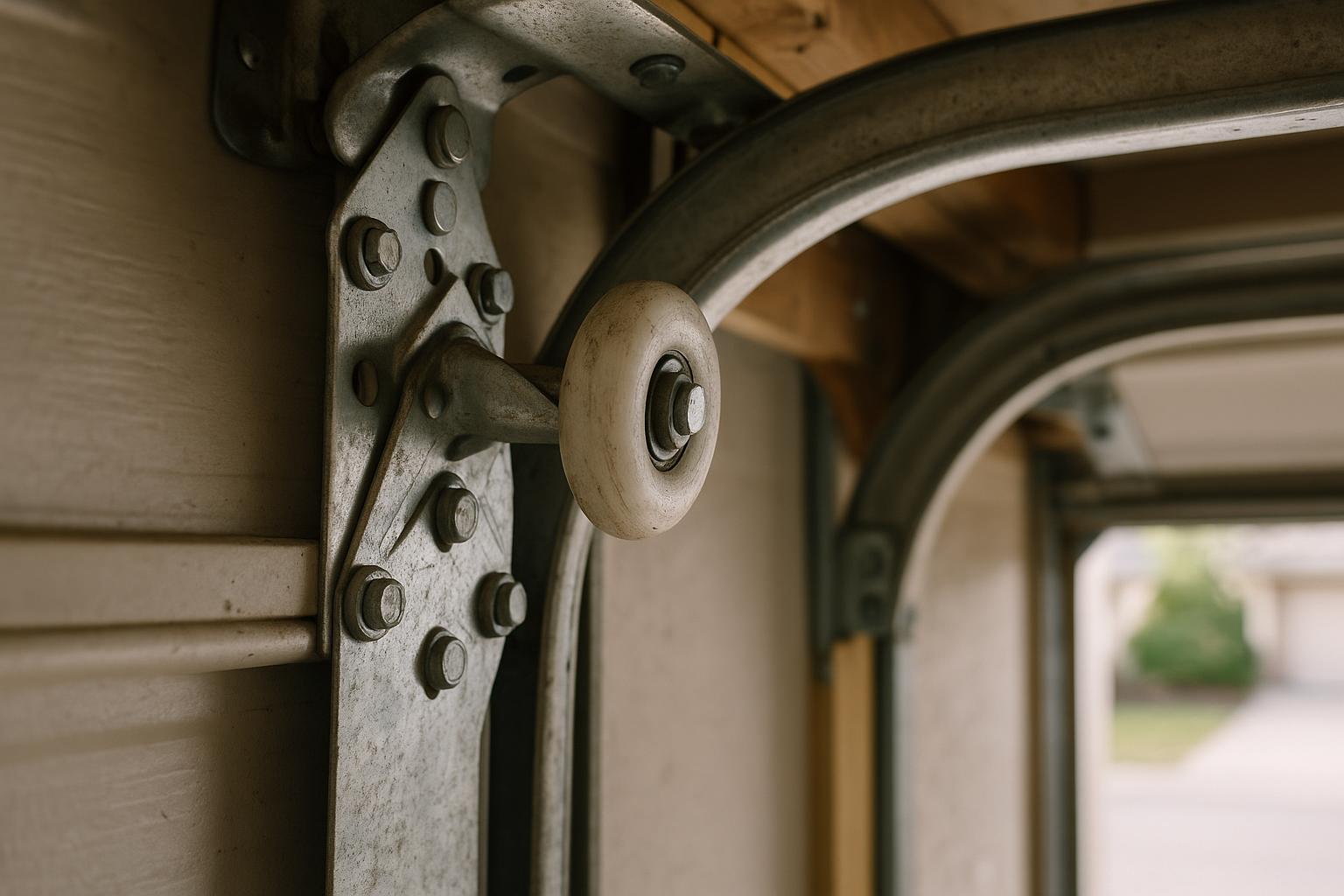
- Worn rollers: Steel rollers wear down over time, especially if they haven't been lubricated regularly. As the rollers degrade, they create friction against the tracks and produce that harsh grinding sound.
- Misaligned tracks: If the vertical or horizontal tracks have shifted even slightly, the door can scrape against them as it moves up and down. This is especially common in older homes in Oak Park where settling foundations can pull tracks out of alignment.
- Opener gear issues: If the grinding seems to come from the motor unit itself rather than the door, the internal gears in your garage door opener may be stripped or wearing out.
What to Do
Start by visually inspecting the rollers and tracks. If the rollers look worn, cracked, or flat on one side, they need to be replaced. Upgrading to nylon rollers is a smart move — they're significantly quieter and don't require as much maintenance. If the tracks look bent or out of alignment, don't try to force them back into place yourself. Call a professional to realign them safely.
Squealing or Screeching Noises
High-pitched squealing is hard to ignore, especially when you're opening the garage door early in the morning and trying not to wake the neighbors.
Common Causes
- Lack of lubrication: This is the number one cause of squealing garage doors. The springs, hinges, rollers, and bearing plates all need periodic lubrication to operate quietly.
- Worn torsion springs: As torsion springs age and lose tension, they can produce a squealing or creaking sound during operation. This is especially noticeable during temperature swings here in the Chicago area.
- Dry or rusted bearings: The bearings in the spring system and rollers can dry out or corrode, creating friction that leads to that unmistakable screech.
What to Do
Apply a garage door-specific lubricant (not WD-40, which is a solvent, not a lubricant) to the springs, hinges, rollers, and bearing plates. A silicone-based or lithium-based spray works best. If the squealing persists after lubrication, the components may be too worn and need replacement. Spring work should always be handled by a trained technician due to the extreme tension involved.
Rattling or Vibrating Sounds
A rattling garage door often sounds worse than it is, but that doesn't mean you should ignore it.
Common Causes
- Loose hardware: Over thousands of cycles, the nuts, bolts, and screws that hold your garage door system together naturally loosen. Loose hinges, brackets, and track fasteners are the most common culprits behind rattling.
- Loose opener chain or belt: If you have a chain-drive opener, a loose chain will slap and rattle during operation. Belt-drive openers can also produce vibrations if the belt tension isn't correct.
- Unsecured opener mounting: If the opener unit itself isn't firmly attached to the ceiling or support bracket, the vibrations from the motor will amplify through the structure and create a noticeable rattle throughout the garage.
What to Do
Grab a socket wrench and tighten all visible nuts and bolts on the door's hinges, track brackets, and roller brackets. Check the chain or belt tension on your opener and adjust it according to the manufacturer's specifications. If the opener is vibrating excessively, make sure the mounting bracket is secure and consider adding vibration-dampening pads between the bracket and the ceiling.
Banging or Popping Sounds
A loud bang or pop from your garage door can be startling. Sometimes it's harmless, and sometimes it signals a serious problem.
Common Causes
- Panel sections shifting: As the door transitions between the curved and straight portions of the track, the panels flex slightly. If hinges are worn or panels are slightly warped, this flexing can produce a popping or banging sound.
- Spring tension issues: Springs that are improperly adjusted — either too tight or too loose — can cause the door to jerk or snap during movement, producing a loud bang.
- Broken spring: A sudden, gunshot-like bang from the garage when you're not even using the door almost always means a torsion spring has snapped. This is a serious issue that requires immediate professional attention.
What to Do
If you hear a one-time loud bang and your garage door won't open, check the springs visually. A broken torsion spring will have a visible gap in the coil. Do not attempt to operate the door or replace the spring yourself. Call a garage door professional right away.
When to Lubricate vs. When to Call a Pro
Many garage door noises can be resolved with simple lubrication and hardware tightening — tasks any homeowner can handle with basic tools and about 20 minutes of time. We recommend lubricating all moving parts at least twice a year, ideally in the spring and fall.
However, some noises indicate problems that require professional diagnosis and repair. You should call a technician if:
- The noise persists after lubrication and tightening
- You suspect a spring, cable, or track issue
- The door is visibly off-balance or crooked
- The opener motor is making internal grinding sounds
- You heard a loud bang and the door won't move
Keep Your Garage Door Quiet and Running Smoothly
A noisy garage door isn't just an annoyance — it's a warning sign. Addressing unusual sounds early can save you from costly emergency repairs and extend the life of your entire garage door system. Regular maintenance goes a long way toward keeping things quiet and functional, especially with the temperature extremes we experience in Oak Park and the surrounding area.
If your garage door is making sounds you can't explain or fix on your own, Oak Park Garage Door Pro is here to help. We provide thorough inspections, honest assessments, and reliable repairs for homeowners across Oak Park, River Forest, Berwyn, Forest Park, and nearby communities. Give us a call, and we'll get your garage door back to running the way it should — quietly.