
Your Garage Door Springs Are Working Harder Than You Think
Every time you open and close your garage door, the springs do the heavy lifting — literally. A standard residential garage door can weigh anywhere from 130 to 350 pounds, and the springs are responsible for counterbalancing all of that weight. Without functioning springs, your garage door opener alone doesn't have the power to lift the door, and manually opening it becomes nearly impossible.
Most homeowners in Oak Park don't think about their garage door springs until something goes wrong. But springs don't fail without warning. There are clear signs that a breakdown is coming, and catching them early can save you from an inconvenient — and potentially dangerous — situation.
How Long Do Garage Door Springs Last?
Garage door springs have a finite lifespan measured in cycles. One cycle equals one full open and one full close. Most standard torsion springs are rated for around 10,000 cycles, which translates to roughly 7 to 10 years of normal use. If you open and close your garage door more frequently — say, multiple family members coming and going throughout the day — your springs will wear out faster.
High-cycle springs rated for 25,000 or even 50,000 cycles are available and worth considering if you want to extend the time between replacements. If your garage door is approaching the 8- to 10-year mark and you've never had the springs replaced, it's time to start paying attention.
7 Warning Signs Your Springs Are Failing
1. The Door Feels Heavier Than Usual
Try this simple test: disconnect your garage door opener by pulling the emergency release handle, then manually lift the door about halfway. A properly balanced door with healthy springs should stay in place on its own. If the door feels unusually heavy, slides back down, or requires significant effort to lift, your springs are losing tension and nearing the end of their life.
2. The Door Opens Slowly or Unevenly
When springs start to weaken, you may notice your garage door opening more slowly than it used to. If you have a two-spring system and one spring is weaker than the other, the door may rise unevenly — one side lifting faster than the other. This puts extra strain on your opener, your tracks, and the remaining good spring.
3. You Hear Loud Squeaking or Grinding
Some noise during operation is normal, but new or worsening squeaking, popping, or grinding sounds can indicate that your springs are corroding, losing lubrication, or developing stress fractures. Don't ignore unusual sounds — they're your garage door's way of telling you something is wrong.
4. Visible Gaps in the Spring Coils
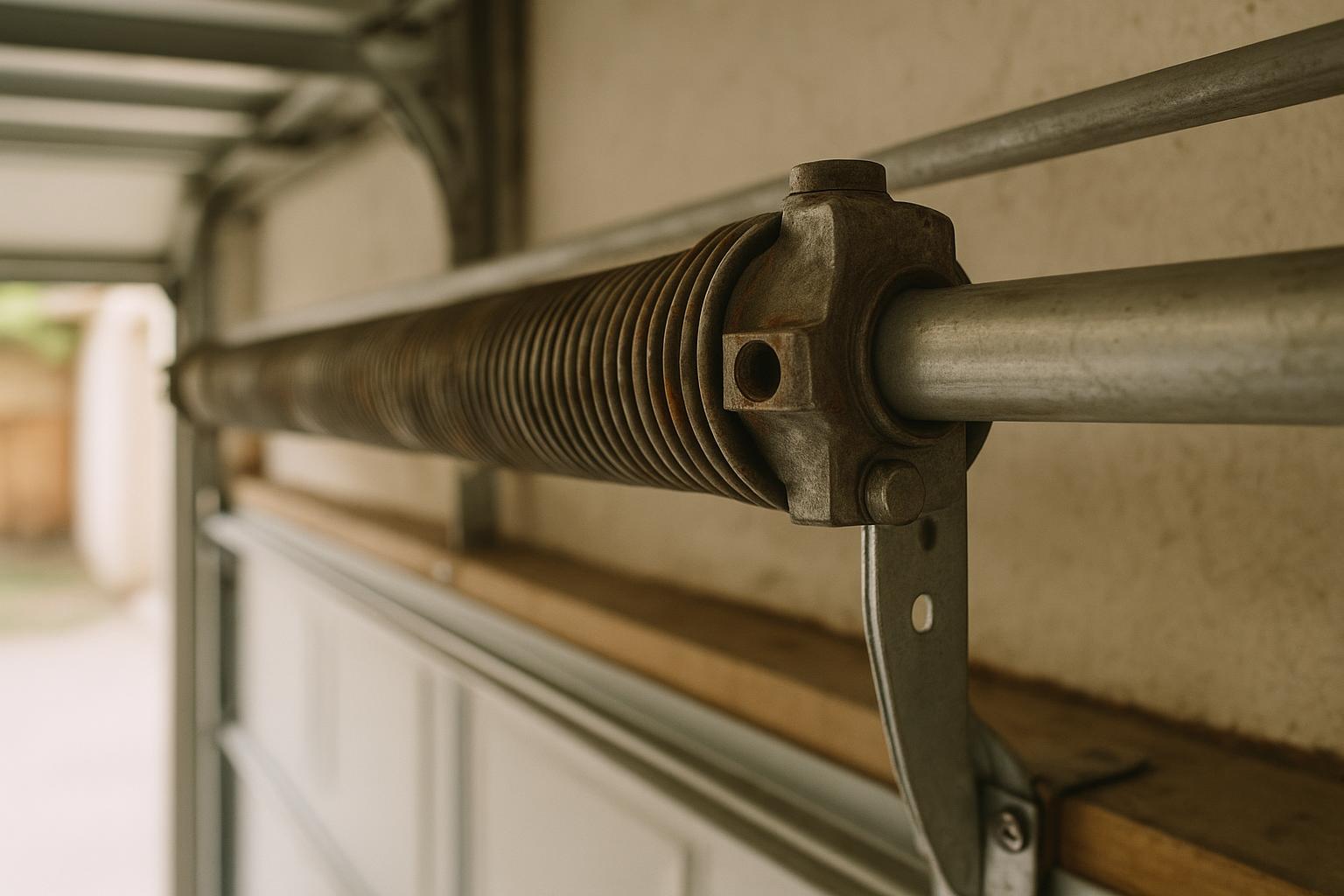
Take a look at your torsion springs, which are mounted on a metal shaft directly above the inside of the garage door. Healthy springs have tightly wound coils with uniform spacing. If you notice visible gaps or separation between the coils, the spring has stretched and is losing its ability to support the door's weight. This is one of the most reliable visual indicators that replacement is needed soon.
5. The Door Slams Shut
If your garage door closes faster than normal or slams down the last few inches, the springs are no longer providing adequate resistance. This is a safety concern, especially for households with children or pets. A door that drops quickly can cause serious injury or property damage.
6. Your Opener Is Straining
Your garage door opener is designed to guide the door — not to do all the lifting. When springs weaken, the opener has to work much harder to raise the door. You might notice the motor running louder, the door hesitating at the start of the opening cycle, or the opener stopping mid-cycle. Continuing to operate a failing opener under this extra load can burn out the motor entirely, turning one repair into two.
7. Rust and Corrosion on the Springs
Oak Park homeowners know that Midwest humidity and temperature swings take a toll on metal components. If your springs show visible rust or corrosion, their structural integrity is compromised. Rust increases friction on the coils, which accelerates wear and shortens the spring's remaining lifespan. Regular lubrication can slow corrosion, but once rust is significant, replacement is the safest option.
What Happens When a Spring Actually Breaks?
When a garage door spring snaps, it releases a tremendous amount of stored energy. You'll likely hear a loud bang from inside the house — many homeowners describe it as sounding like a gunshot or a car backfiring. After a spring breaks:
- Your garage door opener won't be able to lift the door
- The door will be extremely heavy and difficult to open manually
- If the door was open when the spring broke, it may come crashing down
- Broken spring pieces can fly across the garage, posing a serious injury risk
This is why catching the warning signs early matters so much. A planned spring replacement is safer, more convenient, and often less expensive than an emergency repair.
Why Spring Replacement Is Not a DIY Job
We understand the appeal of handling home repairs yourself, but garage door spring replacement is one job that should always be left to professionals. Torsion springs are under extreme tension, and improper handling can result in severe injuries or even death. The tools and expertise required to safely remove and install these springs go beyond what most homeowners have available.
A trained technician can also evaluate your entire spring system, recommend the right spring type and cycle rating for your door, and ensure everything is properly balanced after installation. This protects your investment and keeps your family safe.
Keep Your Garage Door Safe and Reliable
If you've noticed any of these warning signs, don't wait for a full spring failure. At Oak Park Garage Door Pro, we provide fast, professional spring replacement for homeowners throughout Oak Park, River Forest, Berwyn, Forest Park, and the surrounding communities. We'll inspect your springs, give you an honest assessment, and get your door back in safe working order.
Whether you need a routine spring replacement or emergency service after a break, our team is here to help. We believe in fixing things right the first time so your garage door keeps working reliably for years to come.
Concerned about your garage door springs? Contact Oak Park Garage Door Pro today to schedule an inspection. Catching a worn spring early is always better than dealing with a broken one later.