
That Frustrating Moment When Your Garage Door Won't Stay Closed
You press the button on your remote, watch the garage door glide downward, and then — just inches from the floor — it stops and reverses right back up. You try again. Same thing. Maybe you try holding the wall button, and it finally closes, but the next time you use the remote, the problem returns.
This is one of the most common garage door complaints we hear from homeowners in Oak Park, and it's especially frustrating during the colder months when you need your garage sealed tight against the wind and snow. The good news is that this issue almost always has a logical, fixable cause. The key is understanding what's triggering the reversal so you can address it properly — and safely.
Understanding Why Garage Doors Have a Safety Reverse
Before we dive into causes, it helps to understand why your garage door is designed to reverse in the first place. Federal law has required garage door openers to include safety reversal mechanisms since 1993. These systems are designed to prevent the heavy door from closing on a person, pet, or object. There are two primary safety systems at work:
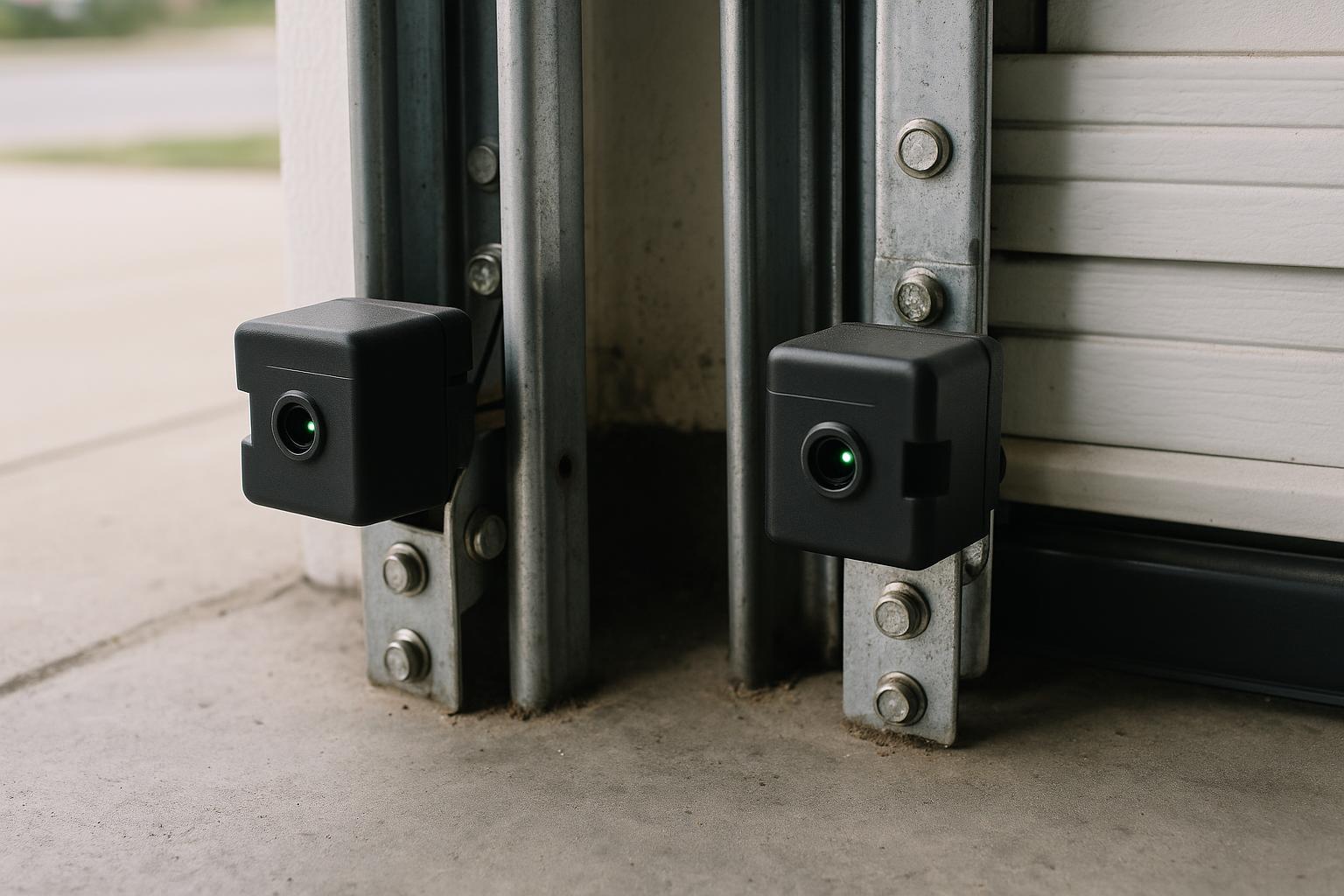
- Photo-eye sensors: Two small sensors mounted near the bottom of your garage door tracks that send an invisible beam across the opening. If anything breaks that beam, the door reverses.
- Auto-reverse force settings: If the door encounters physical resistance while closing — like hitting an object or binding against the tracks — the opener's internal settings tell it to reverse direction.
Both of these systems are essential for safety. But when they malfunction or get triggered incorrectly, you end up with a door that refuses to close.
The Most Common Causes of Garage Door Reversal
1. Misaligned or Dirty Photo-Eye Sensors
This is the number one reason garage doors reverse prematurely. The photo-eye sensors on either side of your garage door opening need to be perfectly aligned with each other to maintain their infrared beam. Over time, they can get bumped by a bike, a trash can, or even a broom handle. When they're out of alignment, the opener thinks something is blocking the door's path.
Dirt, cobwebs, and moisture can also interfere with the sensors. Here in Oak Park, where we deal with everything from summer humidity to winter salt and grime, sensor lenses can get cloudy surprisingly fast. A gentle wipe with a soft cloth solves this issue more often than you'd think.
2. Sensor Wiring Issues
The wires running from your photo-eye sensors back to the opener unit can become frayed, disconnected, or damaged — especially in older homes around Oak Park and River Forest where garage wiring may not have been updated in decades. If one sensor loses its connection, the safety circuit is broken and the door will reverse every time.
3. Incorrect Close-Force Settings
Your garage door opener has adjustable force settings that control how much resistance the motor will push through before reversing. If the close-force setting is too low, the door may interpret normal friction — from cold-stiffened weatherstripping, slightly dirty tracks, or a heavy door — as an obstruction and reverse.
This is particularly common during Oak Park winters. When temperatures drop, lubricant thickens, weatherstripping stiffens, and metal tracks contract slightly. A door that closed perfectly in September may start reversing in January because the conditions have changed.
4. Worn or Damaged Tracks
Bent, dented, or misaligned tracks create friction points that the opener interprets as resistance. If your garage door shudders, jerks, or makes scraping sounds as it moves, the tracks may be the culprit. This is not a DIY fix — track adjustments require proper tools and experience to avoid making the problem worse or creating a safety hazard.
5. Broken or Weakening Springs
Your garage door springs do the heavy lifting — literally. They counterbalance the weight of the door so the opener motor doesn't have to work as hard. When springs weaken or break, the door becomes significantly heavier. The opener struggles to move it, detects excessive resistance, and reverses.
If you notice your door seems sluggish, sounds strained, or the opener motor runs louder than usual, weakening springs could be the underlying issue. Spring replacement is one of the most dangerous garage door repairs and should always be handled by a professional.
6. Something Is Actually in the Way
Sometimes the simplest explanation is the right one. A small object near the base of the door, a leaf blown into the sensor path, or even direct sunlight hitting the photo-eye sensor at just the right angle can trigger a reversal. Before assuming something is broken, do a quick visual check of the door's path and the sensor area.
What You Can Safely Check Yourself
There are a few things you can inspect without any special tools or expertise:
- Clean the sensor lenses with a soft, dry cloth.
- Check sensor alignment — most sensors have a small LED light. If it's blinking instead of steady, the sensor is misaligned. Gently adjust it until the light holds steady.
- Look for obstructions in the door's path and around the sensor area.
- Inspect the sensor wires visually for obvious damage or disconnection.
- Test the door by holding the wall-mounted button continuously. If the door closes and stays closed when you hold the button, the issue is almost certainly sensor-related, since holding the button overrides the photo-eye system.
When to Call a Professional
If cleaning and realigning the sensors doesn't solve the problem, it's time to call in a garage door technician. Issues involving force settings, track alignment, springs, and opener mechanics require hands-on diagnosis and specialized knowledge. Adjusting these components incorrectly can damage your opener, void warranties, or create serious safety risks.
At Oak Park Garage Door Pro, we diagnose reversal issues quickly because we've seen every variation of this problem across homes in Oak Park, Berwyn, Forest Park, and the surrounding communities. Most reversal problems can be resolved in a single service visit, and we'll let you know upfront what the issue is and what it costs to fix before we do any work.
Preventing Future Reversal Problems
Regular maintenance goes a long way toward preventing this issue from recurring. Here's what we recommend:
- Schedule annual maintenance — a professional tune-up catches small problems before they become big ones.
- Lubricate moving parts seasonally, especially before winter.
- Keep sensor lenses clean and check alignment every few months.
- Test the safety reverse monthly by placing a roll of paper towels in the door's path. The door should reverse immediately upon contact.
- Keep the tracks clear of debris, dirt, and cobwebs.
A garage door that won't close isn't just an inconvenience — it's a security concern and an energy efficiency problem, especially during harsh Midwest winters. If your door keeps reversing and you can't pinpoint the cause, don't let frustration lead to a workaround that bypasses the safety features. Those features exist to protect your family.
Give us a call or schedule a service appointment. We'll get your garage door closing properly — and safely — so you can stop pressing that button five times and hoping for the best.